Your cart is currently empty!
Category: english
-
SUPREME COURT ALLOWS ANTICIPATORY BAIL UNDER SC/ST ACT
Recently, a 2-Judge bench of the Supreme Court clarified that the bar on anticipatory bail under
Section 18 of the SC and ST (Prevention of Atrocities) Act, 1989, is not applicable unless a prima
facie case under the Act is established against the accused.
Key Highlights of the Judgment- Insult and Intention to Humiliate:
°
°
°
The court emphasized that merely insulting a member of the SC or ST community is not
automatically an offence under the SC/ST Act.
For an insult to qualify as an offence, the accused must have the intention to humiliate based on
caste identity.
Only intentional insults or intimidation arising from entrenched social norms (such as
untouchability or caste superiority) fall within the scope of the Act. - Anticipatory Bail:
о
°
°
Anticipatory bail is a legal direction issued by the High Court or the Court of Session.
It allows a person to seek pre-arrest bail when accused of committing a non-bailable offence.
Previously governed by Section 438 of the Code of Criminal Procedure (CrPC), the relevant
provisions for anticipatory bail are now found in Section 482 of the Bhartiya Nagarik Suraksha
Sanhita (2023). - SC and ST (Prevention of Atrocities) Act, 1989:
°
°
Objective: The Act aims to prevent offences against members of SCs and STs.
Special Courts: It establishes Special Courts for the trial of such offences.
⚫ Relief and Rehabilitation: The Act also provides for relief and rehabilitation of victims.
Salient Features of the Act - Accused Membership:
о
The accused must not be a member of the SC or ST community. - Offences Covered:
°
Offences include employing SC or ST members for manual scavenging, dedicating SC or ST
women to deities or temples as devadasis, and denying customary right of passage to places of
public resort. - Punishment for Neglect of Duties:
°
Public servants who are not members of the SC or ST community can also face punishment
under the Act for neglecting their duties related to preventing atrocities.
Remember that this information is based on the recent Supreme Court judgment and the provisions of
the SC and ST (Prevention of Atrocities) Act.
- Insult and Intention to Humiliate:
-
Emergency provisions
Context
The recent violence in Manipur has reignited the debate on Centre-State relations and the use of emergency provisions in India. This situation underscores the complexities and challenges inherent in India’s federal structure and the constitutional mechanisms designed to address such crises.
Federal Set-up in India
- Federal Structure: India operates as a federal system with distinct governments at the Centre and the States. This structure is designed to balance power and responsibilities between different levels of government.
- Seventh Schedule: The Indian Constitution’s Seventh Schedule delineates the distribution of powers between the Union and the States through three lists: Union List, State List, and Concurrent List.
- Union List: Includes subjects of national importance such as defense, foreign affairs, and atomic energy.
- State List: Covers subjects of local or state importance like police, public health, and agriculture.
- Concurrent List: Contains subjects of mutual interest to both the Union and States, such as education, marriage, and bankruptcy.
- State Responsibility: Maintaining law and order is primarily the domain of State governments. For instance, the police and public order are state subjects, meaning each state has its own police force and laws governing public order.
Emergency Provisions in the Constitution
- Part XVIII: Emergency provisions are outlined in Part XVIII of the Constitution, providing the framework for dealing with extraordinary situations.
- Article 355: Imposes a duty on the Centre to protect every State from external aggression and internal disturbance. It ensures that State governments operate according to the Constitution.
- Example: During the 1984 anti-Sikh riots, the Centre invoked Article 355 to assist the state governments in restoring order.
- Article 356: Allows for the imposition of President’s rule if a State’s government cannot function in accordance with constitutional provisions.
- Example: President’s rule was imposed in Jammu and Kashmir in 2018 after the coalition government collapsed.
Comparison with Other Countries
- United States: The U.S. federal system includes mechanisms for federal intervention in states, but there are no provisions for removing state governments. The Posse Comitatus Act limits the use of federal military personnel to enforce domestic policies within the states.
- Example: During Hurricane Katrina in 2005, federal intervention was limited and required state requests for assistance.
- Australia: Similar to the U.S., Australia’s federal system allows for federal intervention to protect states but does not include provisions for dismissing state governments.
- Example: The Australian government provided extensive support to states during the 2019-2020 bushfire crisis, but state governments remained in control of their respective jurisdictions.
B.R. Ambedkar’s View
- Justification for Article 355: B.R. Ambedkar explained that Article 355 was designed to ensure that any interference by the Centre in a State’s administration under Article 356 is justified and constitutionally mandated.
- Check on Federal Power: This provision serves to prevent arbitrary or unauthorized use of Article 356, maintaining a check on federal power and preserving the federal structure.
- Example: Ambedkar’s vision was to create a safeguard against potential misuse, ensuring that federal intervention would be a last resort.
Issues and Concerns
- Misuse of Article 356: Despite hopes that Articles 355 and 356 would remain a dead letter, Article 356 has been misused several times to dismiss elected state governments, undermining constitutional principles and federalism.
- Example: In 1977, the Janata Party government dismissed nine Congress-ruled state governments after coming to power at the Centre.
- Example: In 1980, Indira Gandhi’s government dismissed nine non-Congress state governments after regaining power.
Judicial Rulings
- S.R. Bommai Case (1994): Restricted the misuse of Article 356, stating it should only be used for constitutional breakdowns, not ordinary law and order issues. The imposition is subject to judicial review.
- Example: The Supreme Court reinstated the dismissed state governments in Karnataka, Meghalaya, and Nagaland, emphasizing that Article 356 should not be used for political purposes.
- Expansion of Article 355: The Supreme Court has broadened the interpretation of Article 355 over time, allowing the Union to take necessary actions to protect states and ensure constitutional governance.
- Example: In the Naga People’s Movement case (1998), the Court upheld the Centre’s intervention to protect the state from internal disturbances.
Recommendations by Commissions
- Sarkaria Commission (1987): Recommended that Article 356 should be used sparingly and only as a last resort. It emphasized cooperative federalism and suggested mechanisms for better Centre-State coordination.
- National Commission (2002): Reiterated the need for restraint in using Article 356 and recommended measures to strengthen federal relations.
- Punchhi Commission (2010): Suggested that Article 355 requires the Union to protect states and allows necessary actions to fulfill this duty. It also emphasized that Article 356 should be used only in extreme and urgent situations.
- Example: The Punchhi Commission recommended setting up a permanent inter-state council to address Centre-State issues proactively.
Conclusion
- Balancing Act: The emergency provisions are essential for maintaining constitutional order, but their impact on Centre-State relations is significant and complex.
- Guiding Principles: Their application must be guided by principles of fairness, necessity, and constitutional integrity.
- Future Outlook: Ensuring judicious use of these provisions within the framework of federal principles is key to preserving the democratic and federal fabric of the nation.
Current Events Connection
- Manipur Violence: The recent violence in Manipur highlights the ongoing challenges in Centre-State relations and the critical role of emergency provisions in addressing internal disturbances. The Centre’s response to the situation in Manipur will be closely watched as a test of the balance between state autonomy and federal intervention
-
One Nation One Election
The Union government under PM Modi plans to implement the ‘One Nation One Election’ policy during its current tenure. This initiative aims to streamline the electoral process by synchronizing the elections for the Lok Sabha and State Legislative Assemblies.
Background
- Definition: Simultaneous Elections (One Nation One Election) refer to the idea of holding Lok Sabha and State legislative assembly elections together to reduce the frequency and cost of elections.
- Historical Context:
- Simultaneous elections were held in India in 1951-52, 1957, 1962, and 1967.
- The schedule was disrupted post-1967, and elections have not been realigned since.
- Recent Developments:
- Prime Minister Modi highlighted the issue in 2014.
- A committee headed by former president Ram Nath Kovind was formed to examine the feasibility of simultaneous elections.
Suggestions of the Ram Nath Kovind Panel
- Stepwise Process:
- First Step: Simultaneous polls for Lok Sabha and state assembly elections.
- Second Step: Local body (municipal and panchayat) polls within 100 days.
- Hung House and No-confidence Motion:
- Fresh elections to be held only for the remaining term of the immediately preceding full term of the House.
- Constitutional Amendments:
- Amendments to Article 83 (duration of Houses of Parliament) and Article 172 (duration of State legislatures) are required.
- These amendments will not need ratification by the States.
- Ratification by States:
- Amendments to Article 324A to allow simultaneous elections in panchayats and municipalities.
- Amendments to Article 325 to enable the Election Commission of India (ECI), in consultation with State election authorities, to prepare a common electoral roll and voter ID cards.
Arguments in Favour of One Nation One Election
- Cost Reduction:
- Reduces the huge expenditure incurred for conducting separate elections every year.
- Governance Efficiency:
- Frequent elections lead to the imposition of the Model Code of Conduct, affecting normal governance.
- Simultaneous elections can mitigate this issue.
- Manpower Utilization:
- Frees crucial manpower often deployed for prolonged periods on election duties.
- Focus on Governance:
- Increases focus on governance instead of being constantly in election mode.
Arguments Against One Nation One Election
- Logistical Challenges:
- Massive logistical challenges in coordinating schedules, resources, etc.
- Political Implications:
- May benefit the dominant national party or the incumbent at the Centre at the cost of regional parties.
- Regional issues may be overshadowed by national issues.
Way Ahead
- Synchronized Polls:
- Synchronized polls for all three tiers of government will improve governance architecture.
- Enhances transparency, inclusivity, ease, and confidence of voters.
- Law Commission Recommendations:
- The 22nd Law Commission is expected to recommend simultaneous polls from the 2029 general election cycle.
Current Events and Examples
- Recent Discussions:
- The Union government has been actively discussing the implementation of simultaneous elections.
- The Election Commission of India has been exploring the feasibility and logistics of this initiative.
- Global Examples:
- Countries like Sweden and South Africa conduct simultaneous elections, which have shown benefits in terms of cost and governance efficiency.
Conclusion
The implementation of ‘One Nation One Election’ presents both opportunities and challenges. While it promises to reduce costs and improve governance, it also poses significant logistical and political challenges. A balanced approach, considering the diverse political landscape of India, is essential for the successful implementation of this policy.
-

Food VS Fuel
The diversion of phosphoric acid, a key ingredient in fertilizers, for electric vehicle (EV) battery production is creating a potential “food vs cars” dilemma. This issue is particularly relevant in the context of India’s heavy reliance on phosphate imports and the growing demand for EVs as part of the global push towards clean energy.
Body
1. Understanding the Dilemmas
- Food vs Fuel Dilemma:
- Definition: The conflict between using crops like sugarcane, maize, and soybeans for producing biofuels (ethanol, biodiesel) instead of for food.
- Impact: This can lead to reduced food supply and increased food prices.
- Example: The U.S. Renewable Fuel Standard (RFS) led to a significant portion of corn being diverted to ethanol production, impacting food prices1.
- Food vs Cars Dilemma:
- Definition: The conflict arising from the use of phosphoric acid, essential for fertilizers like di-ammonium phosphate (DAP), being diverted to produce lithium-iron-phosphate (LFP) batteries for EVs.
- Impact: This shift could lead to fertilizer shortages, affecting crop production and food security while supporting the growth of the EV industry2.
2. Ethical Dilemmas
- Food vs. Cars:
- Issue: Prioritizing food security over technological advancements in EVs.
- Example: The increasing use of phosphoric acid in LFP batteries could compromise the supply of DAP fertilizers, crucial for agriculture2.
- Resource Allocation:
- Issue: Deciding between using limited phosphoric acid for crop growth (essential for global food security) or for EV battery production (important for clean energy and reducing carbon emissions).
- Example: The global demand for EVs is rising, leading to increased competition for phosphoric acid2.
- Global Dependency:
- Issue: India’s heavy reliance on phosphate imports raises questions about fairness and equity in global resource distribution.
- Example: India imports a significant portion of its phosphoric acid from countries like Jordan, Morocco, and Tunisia2.
- Sustainability vs. Development:
- Issue: Balancing environmental sustainability (EV batteries) with food security.
- Example: The push for EVs to reduce carbon emissions must be weighed against the potential impact on food production2.
- Economic Inequality:
- Issue: Small-scale farmers in countries like India may face economic difficulties due to rising fertilizer costs, deepening inequality.
- Example: As phosphoric acid is diverted to EV battery production, the cost of fertilizers may rise, impacting small farmers2.
Examples and Current Events
- India’s Phosphate Imports:
- EV Market Growth:
Conclusion
The “Food vs Cars” dilemma highlights the complex interplay between food security and technological advancement. Policymakers must navigate these ethical and practical challenges
- Food vs Fuel Dilemma:
-

Crackdown on Nidhi Companies: Ensuring Compliance and Protecting Investors
Context
In a significant move to enforce regulatory compliance, the Ministry of Corporate Affairs (MCA) has penalized over two dozen Nidhi companies for violations of the Companies Act. The primary issues identified were delayed financial filings and irregularities in share allotment. This crackdown is part of a broader effort to ensure that financial entities adhere to legal requirements, thereby safeguarding the interests of small investors.
Most of these violations were reported in Tamil Nadu, where several Nidhi companies failed to submit their financial statements and annual returns on time. The Registrar of Companies (RoC) has emphasized the critical importance of compliance, noting that Nidhi companies hold money in trust for their members, making it essential to maintain transparency and accountability.
Body
Understanding Nidhi Companies
Nidhi companies are a unique category of non-banking financial entities in India. Their primary function is to facilitate borrowing and lending among their members, promoting savings and financial inclusion within communities. Governed by Section 406 of the Companies Act, 2013, Nidhi companies are designed to operate on mutual benefit principles, where members pool their resources to provide financial assistance to each other.
Formation and Regulation
Forming a Nidhi company is relatively straightforward, requiring a minimum capital of ₹10 lakh and at least seven members, three of whom must be directors. These companies are subject to specific regulatory requirements to ensure they operate transparently and responsibly. Key regulations include:
- Financial Filings: Nidhi companies must submit their financial statements and annual returns on time to maintain transparency and accountability.
- Share Allotment: Proper procedures must be followed for share allotment to ensure fairness and compliance with legal standards.
- Membership and Deposits: Nidhi companies can only accept deposits from and lend to their members, emphasizing the mutual benefit aspect of their operations.
Current Events and Examples
The recent penalties imposed by the MCA highlight the ongoing challenges in ensuring compliance among Nidhi companies. For instance, in Tamil Nadu, several Nidhi companies were found to have delayed their financial filings, raising concerns about their financial health and transparency. These delays can undermine investor confidence and potentially lead to financial mismanagement.
Importance of Compliance
The RoC has stressed that compliance with regulatory requirements is crucial for protecting small investors. Nidhi companies hold money in trust for their members, making it imperative to maintain high standards of transparency and accountability. Non-compliance can lead to severe consequences, including financial penalties and potential legal action.
Broader Implications
This crackdown on Nidhi companies is part of a larger effort by the MCA to strengthen regulatory oversight and protect investors. It sends a clear message that violations of the Companies Act will not be tolerated and that financial entities must adhere to legal requirements to ensure the safety and trust of their members.
Conclusion
The penalties imposed on Nidhi companies for violations of the Companies Act underscore the importance of regulatory compliance in the financial sector. By enforcing these regulations, the MCA aims to protect small investors and maintain the integrity of financial entities. As Nidhi companies play a crucial role in promoting savings and financial inclusion, it is essential that they operate transparently and responsibly, adhering to all legal requirements.
-
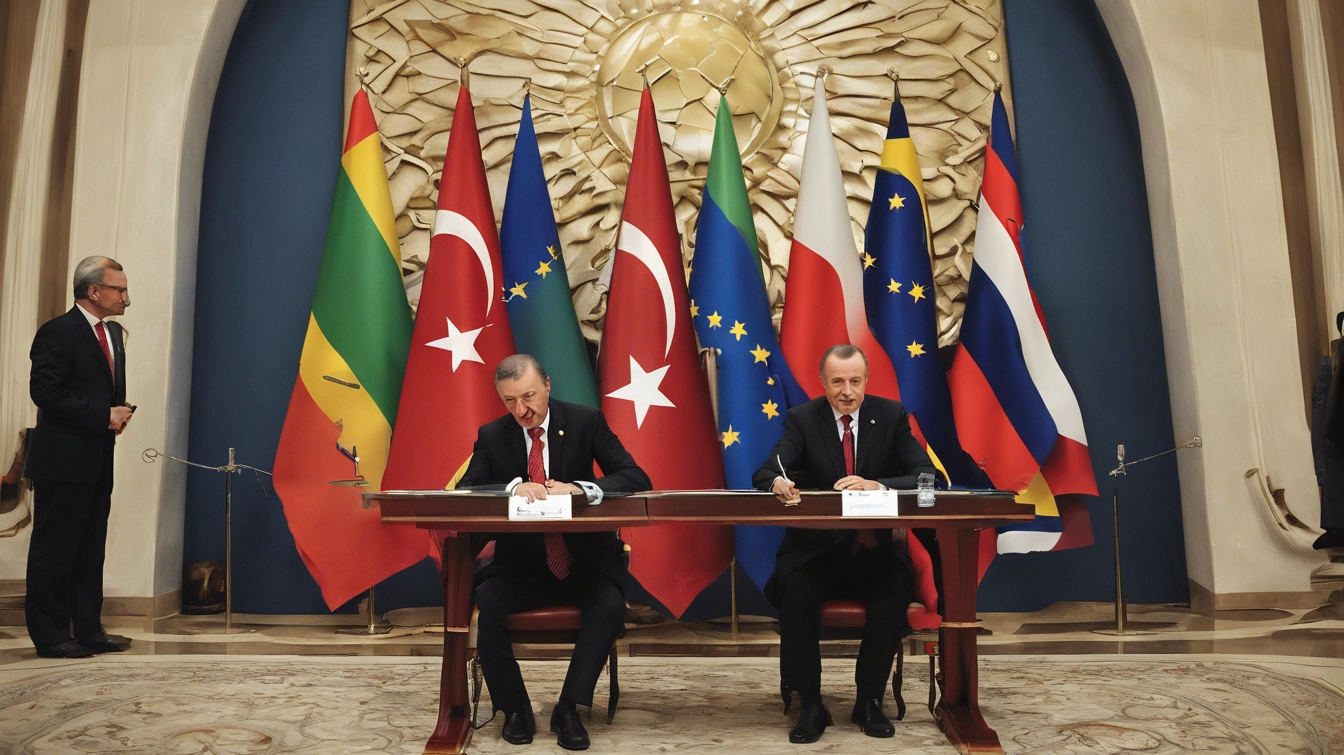
BRICS Summit
Turkey’s attempt to join BRICS might be a strategic move to gain leverage in its stalled EU accession process or to express dissatisfaction with the EU.
Benefits:
- Enhances Turkey’s global influence.
- Facilitates economic cooperation with emerging markets.
- Bolsters Turkey’s political leverage in EU negotiations.
Concerns:
- Could strain relations with the EU and NATO.
- Might undermine Turkey’s credibility within Western alliances.
- Risks diplomatic isolation from Western powers.
India’s stance on expansion:
- India supported the consensus-based expansion of BRICS during the 15th BRICS summit in Johannesburg.
- This expansion strengthens BRICS as a representative of developing countries.
- India has proposed initiatives like creating a BRICS space consortium, investing in skill mapping, technology, and education, and emphasizing cooperation for conservation efforts.
- The expansion aims to make BRICS future-ready by enhancing cooperation, digital solutions, and development initiatives.
Significance for India:
- The inclusion of new members in BRICS is significant for India as it expands partnerships and geopolitical influence.
- However, it also raises concerns about potential pro-China dominance within the alliance.
-
National Judicial Appointments Commission
The Debate
- Union Minister for Law and Justice Kiren Rijiju reignited the debate of NJAC vs Collegium when he commented that the Collegium system of appointment was “opaque” and needed to be reconsidered. This led to the introduction of National Judicial Commission Bill 2022.
The Collegium System
- The current collegium system has evolved over a period of time through the judicial pronouncements. These cases have been mentioned as below:
- First Judges Case (1982)
- SC held that consultation does not mean concurrence
- Gave Primacy to Executive.
- Second Judges Case (1993)
- Court reversed its earlier ruling by changing the meaning of consultation to concurrence.
- Advice tendered by CJI is binding.
- CJI would take into account the views of two of his seniors most colleagues.
- Third Judges Case (1998)
- Court gave primacy to the opinion of CJI in the matter of appointment of Judges
- However, Chief Justice must consult four seniors most judges of SC.
- Opinion of all members of the collegium should be in writing.
- If the majority of the collegium is against the appointment of a particular person that person shall not be appointed.
Requirement of NJAC
- Opaque and Unaccountable System: In collegium system there is lack of information based on which judges make their choices. Without transparency the collegium loses credibility and legitimacy to be accepted by all stakeholders.
- Conflict of Interest: Presently there is no structured process to investigate if a judge recommended by collegium and its members have any conflict of interests in appointing that judge.
- Stifling Diversity of Judges: Collegium system prefers practising lawyers rather than appointing and promoting judges of the subordinate judiciary. As a result of this, the composition of the high courts becomes, literally, an “old boys’ club” featuring largely male, upper-caste, former practising lawyers.
- Gender Imbalance: For 37 years of the Supreme Court’s existence, it had appointed only male judges. In 1989, Fathima Beevi became the first woman to be elevated to the Supreme Court to be a judge by collegium. Till now total of 11 women judges had been appointed.
- Transfer of Judges: At times the senior most judges of high court are transferred before their elevation as chief justice questioning the timing and intention of collegium.
National Judicial Commission Bill, 2022
- A private member bill was introduced by CPI (M)’s Bikash Ranjan Bhattacharya in Rajya Sabha on Friday to regulate the appointments of judges to the High Courts and the Supreme Court.
- The proposed law also aims to lay down judicial standards and provide for accountability of Judges, and establish “credible and expedient” mechanisms for investigating individual complaints for misbehaviour or incapacity of a Judge of the Supreme Court or of a High Court and to regulate the procedure for such investigation.
- Removal of Judges: The bill proposes “presentation of an address” by Parliament to the President in relation to proceeding for removal of a Judge and for matters connected therewith or incidental thereto.
-
HOOCH TRAGEDY
What is Hooch
- Hooch is a commonly used term for poor quality alcohol, derived from Hoochinoo, a native Alaskan tribe that was known to produce very strong liquor.
- Unlike branded liquor which is produced in factories with sophisticated equipment and rigorous quality control, hooch is made in more crude setting without any quality checks.
- It is near impossible to tell whether hooch is safe to consume before actual consumption.
Science of Creation
- Alcohol is produced using two basic processes: fermentation and distillation. When heated, yeast reacts with sugar to ferment and produce a mixture containing alcohol.
- Distillation is key to make anything stronger than beer or wine above 14-18% ABV or alcohol by volume.
- Distillation is the process of physically separating the alcohol from the rest of the mixture using evaporation and condensation.
- In Hooch production firstly they heat water, locally available yeast, and sugar or fruit (often fruit waste) to produce a fermented mixture in a large pot.
- Once sufficient fermentation has occurred, they distil this fermented mixture to produce concentrated alcohol using a rudimentary setup.
Why is Hooch Dangerous
- The fermented mixture which is to be distilled contains more than just consumable alcohol (ethanol). It also contains methanol, a different form of alcohol which is highly toxic for human beings.
- During the distillation, both ethanol and methanol are concentrated. Thus, if done wrong, the end product can have a high concentration of methanol instead of ethanol and thus be poisonous.
- It is crucial to maintain a temperature of above 78.37 °C but below 100°C (the boiling point of water) to obtain potent liquor. Commercial distillers have sophisticated equipment and multiple checks to maintain the accuracy of the process.
- Hooch-makers have no temperature control. This basically means that the process of distillation lacks the accuracy that is crucial to make it safe and effective.
- Adulteration Risk: adulterants like organic waste, battery acid, and industry grade methanol are added to compensate for watered down distillation product, all of which are highly toxic.
- Adulteration can make hooch far more intoxicating, producing effects such as blackouts, memory loss, and high drunkenness even on consumption of low quantities of liquor. If methanol is present in high concentration, liquor is unfit to drink and can be deadly.
Effect of spurious liquor and its treatment
- Methanol or methyl alcohol can cause impaired vision, high toxicity and metabolic acidosis, a condition in which the body produces excessive acid that cannot be flushed out by kidneys.
- The treatment is to administer Fomepizole and ethanol. However, fomepizole can be expensive and unavailable in many parts of India.
- In such cases, doctors administer a mixture of ethanol and water (1:1 ratio). Ethanol inhibits methanol’s conversion into toxins and helps in flushing it out of the body either naturally or through dialysis.
Laws to stop Hooch Production
- Gujarat is the only Indian state with a death penalty for the manufacture and sale of homemade liquor that results in fatalities. The legislation is titled the Bombay Prohibition (Gujarat Amendment) Act, 2009.
- The Mizoram Liquor Total Prohibition Act, 1995 banned sale and consumption of alcohol effective from 20 February 1997.
- The Nagaland Liquor Total Prohibition Act, 1989 (NLTP Act) banned the sale and consumption of alcohol in 1989.
- Over 3.46 lakh people arrested in the last five years and close to 150 lakh litres of country-made and Indian Made Foreign Liquor being seized.
Measures to avoid Tragedies
- Increase Awareness especially in states where prohibition regarding sales of liquor exists.
- Provide psychological counselling to people not able to come out of alcohol consumption.
- 3.Blanket Ban can’t be a solution to reduce alcohol consumption, instead a nuanced approach needs to be followed to gradually reduce consumption.
- Stop bootleggers and mafia groups to sell spurious liquor, since their aim to make quick money having no regards for people health.
- There are many laws in the statute books of state governments with regard to illicit distillation and sale of spurious liquor. Their effective implementation calls for commitment on the part of those in authority.
- A mandatory code for alcohol retailing and implementation of tough measures, which would curb irresponsible ways of expanding retail outlets.
-
INDIA’S NATIONAL QUANTUM MISSION (NQM)
- India is gearing up to launch its first quantum computer as part of the National Quantum Mission (NQM). Let’s delve
into the details:
Mission Goals- The primary goal of the NQM is to establish a quantum computer with the following qubit capacities:
Next Three Years: 20-50 qubits
Next Five Years: 50-100 qubits
.Next Ten Years: 50-1000 qubits
Key Objectives
- Quantum Communication Network:
- The NQM aims to create a secure and high-bandwidth communication infrastructure spanning 2,000 kilometers.
- Additionally, inter-city quantum key distribution (QKD) will cover distances exceeding 2000 km.
⚫ QKD ensures future-proof security for communication networks using quantum mechanics.
2.Quantum Computing Power:
⚫ The mission focuses on developing quantum computers capable of processing 50-1,000 qubits.
⚫ A qubit serves as the fundamental unit of information in quantum computing.
- Magnetometer and Atomic Clocks:
The NQM emphasizes precision measurements through magnetometers (used for measuring magnetic field
strength and direction) and atomic clocks. - Quantum Materials Design:
⚫ Cutting-edge device fabrication relies on advances in quantum materials design.
Implementation Details
- Implementing Agency: The Department of Science & Technology under the Ministry of Science & Technology.
.Mission Duration: 2023 to 2031.
Thematic Hubs- The NQM establishes four thematic hubs:
- Quantum Computing
- Quantum Communication
- Quantum Sensing & Metrology
- Quantum Materials & Devices
Significance
1.Developing Innovation Ecosystem:
- Thematic hubs foster collaboration and expertise across diverse sectors.
⚫ Applications extend to healthcare, drug discovery, finance, and banking industries.
- Global Leadership:
- The NQM positions India as a leader in secure communication and precision measurement.
Challenges: Despite its ambitious goals, the NQM faces several challenges:
. Insufficient Research Expenditure
. Lack of Private Investment
. Delayed Progress
. Skilled Workforce Shortage
. Infrastructure Constraints
- India is gearing up to launch its first quantum computer as part of the National Quantum Mission (NQM). Let’s delve
-
COMPREHENSIVE GUIDELINES FOR HANDLING PUBLIC GRIEVANCES
The Union Government has issued comprehensive guidelines to enhance the Centralized Public
Grievance Redress and Monitoring System (CPGRAMS) and make it more sensitive and accessible
to citizens. Let’s delve into the key highlights and additional information related to this initiative:
Key Highlights of the Guidelines
1. Appointment of Nodal Officers: Each Ministry/Department will designate Nodal Officers
responsible for efficient grievance handling.- Dedicated Grievance Cells: Every Ministry/Department will establish dedicated Grievance Cells
equipped with sufficient resources to address citizen complaints. - Feedback and Appeal System:
- Citizens can provide feedback on resolved grievances via SMS, email, or a call center.
- If dissatisfied, they have the option to file an appeal with senior authorities.
4.Al-Powered Analysis: The system will utilize artificial intelligence to analyze citizen feedback and
improve grievance resolution processes.
- Training and Capacity Building: Grievance officers working on CPGRAMS will undergo training as
part of the SEVOTTAM scheme.
About CPGRAMS
.
•
Purpose: CPGRAMS serves as a common open platform for citizens to register complaints against
any public authority in the Central Government or States/UTS.
Genesis: The Department of Administrative Reforms and Public Grievances established CPGRAMS
in 2007.
Achievements:
- Between 2022 and 2024, CPGRAMS successfully redressed nearly 60 lakh public grievances.
Timelines for grievance redressal have been reduced from 30 days to 21 days.
° - In 2022, the government implemented a 10-step reform plan for CPGRAMS, including the
universalization of CPGRAMS 7.0 and automatic flagging of urgent grievances using AI/ML.
Other Initiatives for Grievance Redressal
- PRAGATI Platform: Developed by the Ministry of Electronics and Information Technology (MeiTY),
PRAGATI is an interactive, ICT-based platform that addresses grievances from the common
person.
2 INGRAM Portal: Launched by the Department of Consumer Affairs, the Integrated Grievance
Redressal Mechanism (INGRAM) focuses on consumer grievances. - Sevottam Service Delivery Excellence Model: Developed by DARPG in 2006, this model aims to
enhance the quality of public service delivery across the country.
- Dedicated Grievance Cells: Every Ministry/Department will establish dedicated Grievance Cells
